

Why do we love “Freebird”?
I mean the grown-up kind of love, where you’ve already cycled through your teenage “That’s awesome!!” to your college/young-adult snark at your friend’s band’s show to “Play Freebird!”, to your thirtysomething yeah-I’ll-hit-stop-on-the-radio-scan-and-rock-out-a-bit-in-the-car-when-nobody’s-looking, to your middle-aged, full on weeping when our Olympic boys and gals score a goal. (Or even, let’s be honest, during that Budweiser commercial.) Is it the verse lyrics? (“I’m a speed-travelin’ on now,” as I thought it was until THIS VERY SECOND, upon learning it’s “I must be traveling now”?) Either way: Probably not. Is it that delicious acoustic-guitar f-l-a-n-g sound, or the always-underrated piano, or the church organ? The “Stairway to Heaven”-like, middle-school-dance-tastic classic rock slow-part-then-fast-part? The requisite ripping guitar solo(s)? Each certainly plays their role.
Probably the correct answer is that the teenager was right: It’s awesome! Or, as Spinal Tap taught us, it’s the Mystery of Roll—we don’t why we respond to great art, we just do. But I would also suggest there’s another reason why our Southern Men carved themselves a place on the Mt. Rushmore of Freedom Rock, and that’s the power of a goddamned great organizing metaphor. What kind of American doesn’t intrinsically understand I’m as free as a bird now / and this bird you’ll never change? No wonder they had to speed up the song and start shredding: That’s just too much fuck-yeah to possibly contain.
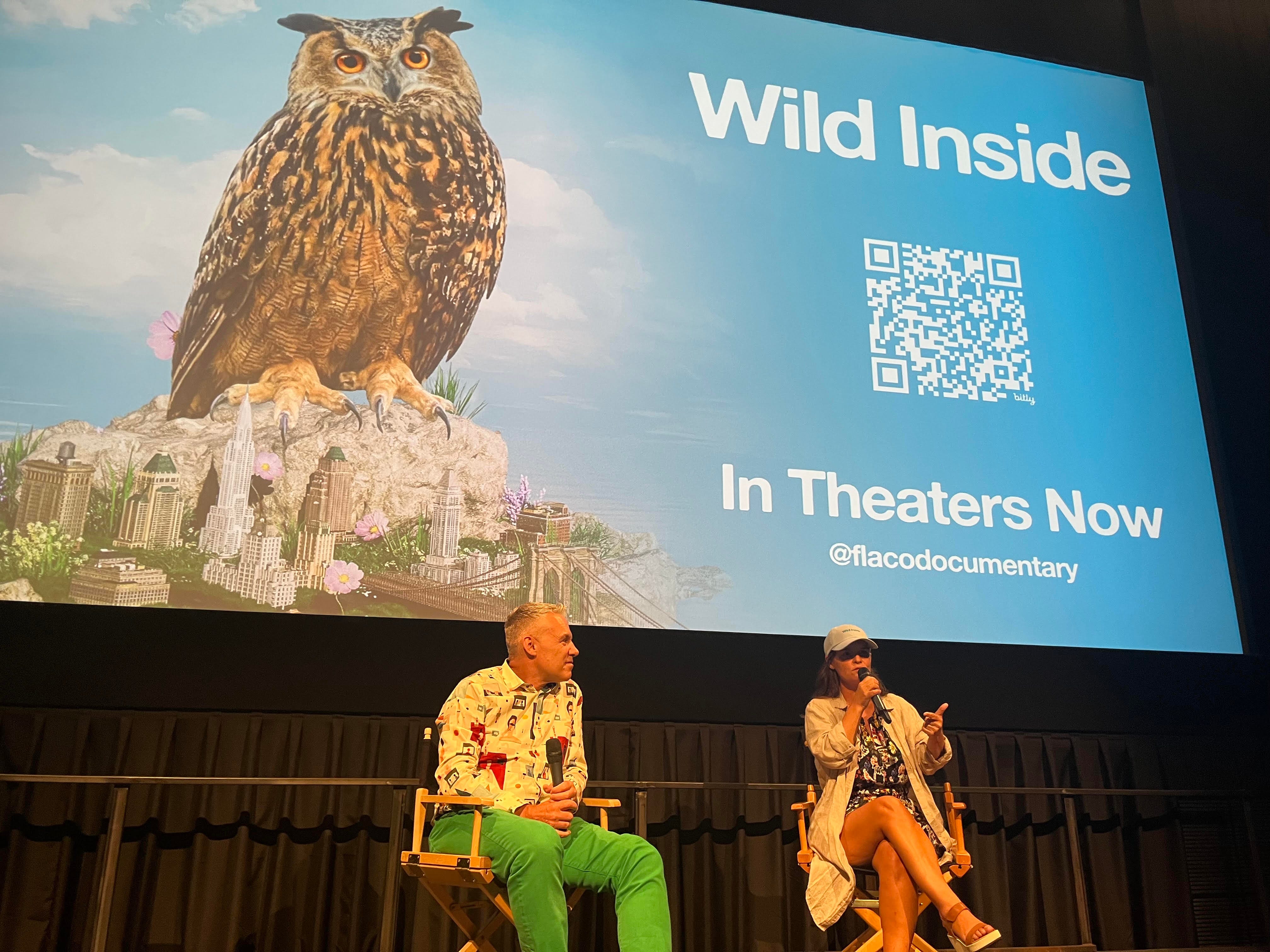
Which brings me to the terrific documentary whose theatrical debut I was lucky enough to witness Friday night:
Why did so many of us absolute non-birders fall in love with this charismatic raptor, to the point where some of us (*coughs*) still follow an alarming number of urban-wildlife accounts on Twitter? Some of it is definitely the Mystery of Roll, in addition to how crazy we still were at the three-year mark of the pandemic. But also the metaphor is just sitting right there: Caged bird is set free, counted out, then almost miraculously learns how fly and hunt and search (in vain!) for love. Like Lynyrd Skynyrd, he makes a legendary run before his untimely demise.
You don’t have to be a Flaco obsessive to enjoy this movie, which was directed by our friend Penny Lane, nor do you have to be New Yorker or New Yorkophile (though, my goodness, is it a love letter to this city and it’s wonderfully odd/unpredictable/brilliant characters). The thing is laugh-out-loud funny in places, blessedly narration-free, and just beautiful to look at and listen to. There’s a limited theater run RIGHT THE HELL NOW; the more you reward good things, the more good things there will be to reward. And that’s the memo.
* Speaking of the movies…. We missed you, Arch!
* Gosh, I thought we hated commies around here, but then up from the Red-baiting top rope comes Bill Maher!
* Speaking of the Mark Twain Prize-winner, I will be on HBO’s Real Time this coming Friday. Turn on, tune in, drop out!
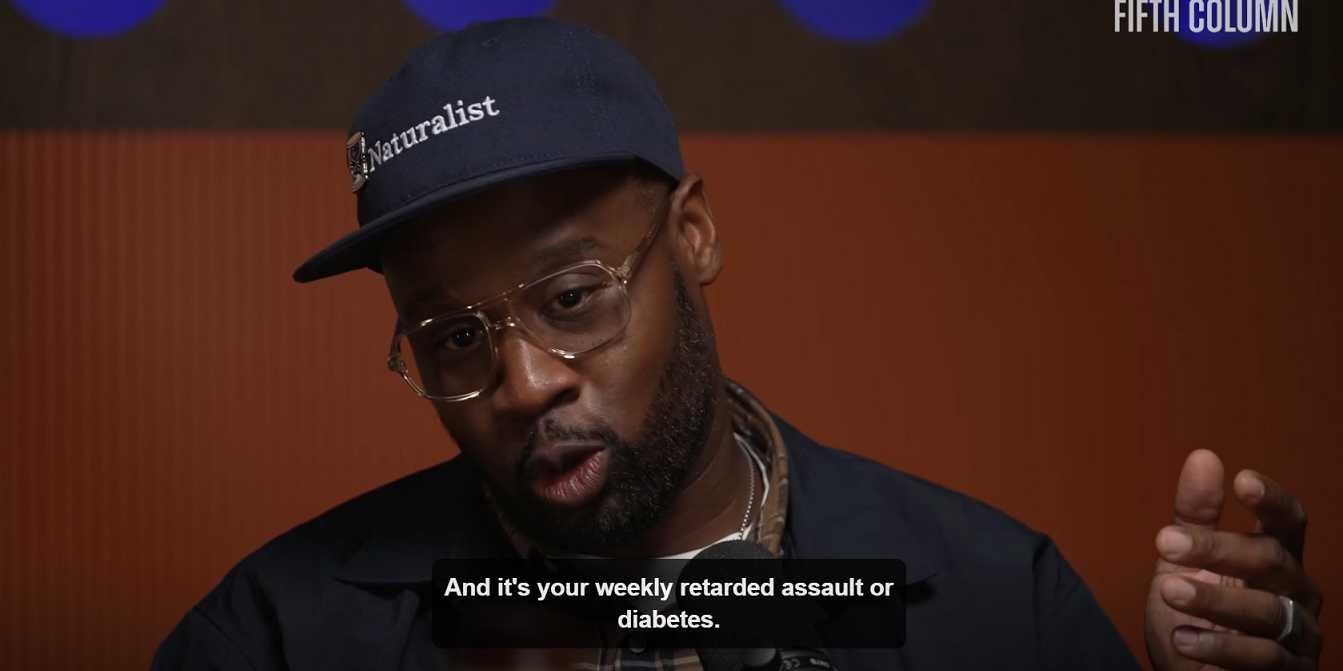
* Always good to have the size-obsessed Jesse Singal on, as we did this week in Episode #568 (and previously in #111, #171 & #501). As per usual when the subject of COVID-19 comes up, there is a minority of you got very upset at this discussion. I was going to write a whole thing about that, but then “Freebird” intervened, and anyway, the world doesn’t lack for my (and others’) words on the subject. My Reason colleague Robby Soave (#332, #517) had a helpful little piece this past week titled “What Anthony Fauci’s Defenders (and Critics) Get Wrong.” I also agree directionally (if not degree-ly) with this Vinay Prasad explainer about why some people still criticize the once-lionized face of public health:
It isn’t because he was wrong. Scientists are wrong all the time. Some scientists are mostly wrong. A few scientists are nearly always wrong. Science is quite forgiving towards people who are wrong. That’s not it. […]
Instead, Fauci is the rare scientist who checked a series of boxes that together generates ire. He (a) alone or with only a small group made decisions that (b) coerced hundreds of millions to do and not do a series of debatable actions (c ) while being largely incorrect (d ) unable to admit uncertainty or doubt (e) unable to gather more evidence (f) demonizing scientists who disagreed and, as we now know, [(g)] while keeping a diary that reveals he often did not believe what he was saying.
That’s a really unique series of events for a scientist. And to do it on so massive a scale. As a general rule in science, if you coerce people to do something — which their intuition questions — you better be near certain. Fauci was near guessing.
* Those who faced real-world ramifications just for expressing skepticism about various Covid-era claims will not soon forget the experience, nor should they. Cultures that enforce orthodoxy on contestable claims end up suppressing speech in the short term, but sowing the seeds of their own demise in the not-so-long.
That’s the subject of a great Free Press essay this week from Kat Rosenfield (#448, #565). Pegged to the mini-kerf(l)uffle over WNBA player Sophie Cunningham calmly advocating for women’s sports to be limited to biological females, Kat’s piece picks at the media machinery of attempted consensus. Longish excerpt:
Recall, for instance, the intense enforcement of the 2022 discourse surrounding Lia Thomas, née William Thomas, a swimmer at the University of Pennsylvania who had been a relatively unexceptional competitor on the men’s team but catapulted to record-shattering dominance after undergoing hormone therapy and getting approval to compete against women. […]
It wasn’t just that mainstream media coverage of Thomas was uniformly positive; it was that a narrative had been born. There was a laudatory Sports Illustrated documentary; glowing profiles by ESPN and ABC; a nomination for the National Collegiate Athletic Association’s (NCAA) Woman of the Year award. The ACLU tweeted in support, and the Gay and Lesbian Alliance Against Defamation (GLAAD) issued a fact sheet instructing journalists as to how Thomas’ story should be covered.
At the same time, women who objected to this state of affairs were excoriated as bigots, bullies, and grifters—including the female swimmers on the Penn women’s team who reported that Thomas’ behavior in the locker room was making them uncomfortable. Thomas’ teammates were cautioned not to speak to the media; those who were uncomfortable with Thomas’ presence in competition or comportment in the locker room were instructed to address their biases with a therapist. Riley Gaines, a swimmer from the University of Kentucky who became an outspoken activist for barring natal male athletes from women’s sports after competing against Thomas in 2022, was widely portrayed in the press as an opportunistic, attention-seeking loser and physically attacked by demonstrators during a college speaking engagement. As recently as last summer, The New York Times described Gaines as an activist whose goal was nothing less than “the legal and cultural dismantling of the belief that transgender people exist.” […]
None of this is to pick on Lia Thomas personally. The movement needed a protagonist; if it hadn’t been the swimmer from Penn, it would have just been someone else. But because it was Lia Thomas (and because the standard uniform for women swimmers leaves so little to the imagination), the visual record of this moment makes for a startling retrospective into just how extreme its demands are. What was required was not just the subversion of our instinctive sense—what Cunningham calls “common sense”—that it was both unfair and immoral to force women to swim against a post-pubescent male; it was the rejection of the epistemic reality that undergirded our moral intuitions. Photographs from this period depict the six-feet-four-inch Thomas literally towering over the competition: broad-shouldered, square-jawed, intact penis and testicles bulging conspicuously beneath a women’s tank-style swimsuit. As naked emperors go, this one was both indelible and undeniable—and yet, denying it was what the party demanded.
And so deny it was what people did.
* Kmele this week did his CNN thang:
* There was also an enTanglement discussion on all things Fauci:
* The Reason Roundtable this past week talked DSA, Iran, and The Odyssey:
* It’s the return of Producer Jason’s Video Vault!
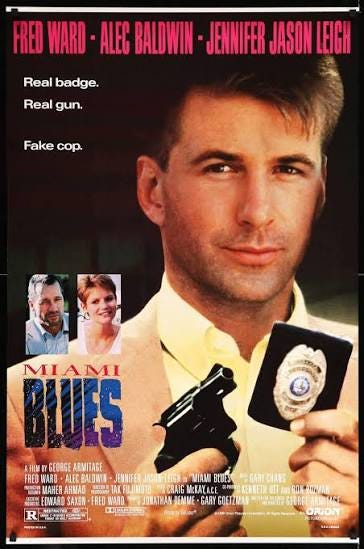
Books are often better than their film adaptations, and that certainly holds true for 1990’s Miami Blues, but Alec Baldwin’s truly psychotic performance as fresh-out-of-jail grifter Freddy Frenger makes this one of my all-time favorite examples of Florida noir. The novel was the first of Charles Willeford’s Hoke Moseley detective series, and is notable for focusing almost entirely on the criminal rather than the cop. Staying true to the source material, the movie-Mosley is both a secondary character and a shithead, played to perfection by Fred Ward (and marking the second time he stepped into what could have been a film franchise based on a popular paperback series [the first being Remo Williams, based on the Destroyer series by Warren Murphy], but instead was one-and-done). It certainly seems like director George Armitage (who later brought us Grosse Point Blank) was pulling up the bridge behind him, because his version of Miami Blues is a totally self-contained maelstrom of gleeful chaos—it’s funny, it’s violent, and it’s unpredictable. Adding to the volatility is Jennifer Jason Leigh as Susie Waggoner, a prostitute who becomes Freddy’s live-in accomplice in an absurd crime wave that you have to see to believe. Watch for free on Tubi; buy the BluRay; here’s the trailer:
* Comment of the Week comes from Nathaniel Tull:
I have a great [Trevor] Hoffman story. Many years ago, I was at a MKE vs SD game in Milwaukee. I, being a proper WI sports fan, had been tailgating prior to the game and was properly lubricated (I.e. drank enough to kill fans from other states). Me and my compatriots made our way to our seats in the outfield and, lo and behold, we were seated right above the opposing team’s bullpen. We spent the next couple hours heckling the Padres relief pitchers, bullpen catcher, and support staff. Finally, the ninth inning comes around and Padres are up by a run or two so we start really going at Hoffman. Nothing terrible, mostly calling him washed up, etc. Hoffman gets the signal to come into the game, he gets up, walks towards the bullpen exit, turns around stares me in the eyes and does the finger across the throat, and heads out to the mound. He proceeds to sit down the Brewers in order with that absolutely filthy change up and my beloved squad lost. It was glorious.
Sendoff: I cried six times Wednesday after hearing of Glen Hansard’s death via motorcycle crash at age 56, but that’s because I only watched six of his videos—a street performance of “Into the Mystic” with Markéta Irglová, duet of “Falling Slowly” with Eddie Vedder, performance (in Kilkenny!) of “Drive All Night” with Bruce Springsteen, TV duet of “Bird of Sorrow” with Imelda May, footage of him singing in a pub` one hour before his death, and of course, his legendary performance of “Fairy Tale of New York” at Shane MacGowan’s funeral. I don’t own any of Glen’s music; couldn’t name even a handful of his songs, and none of that matters, except as testimony to my sloth. He was the leading human avatar of a type or types I know well and have occasionally run with—the principled street musician, the doomed Irish romantic, the generous harmonist, the guy who just brought that glorious-sounding beat-up guitar with him everywhere & you were grateful that he did. And crucially, he and Irglová were at the center of one of my favorite movies ever, a tiny but wise meditation on music, harmony, and romantic longing, Once. The clip below from that movie is the best cinematic depiction I have ever seen of a music connection being made in real time, while the clouds lift and return and lift again from Hansard’s face. Meanwhile, because of the example of Hansard’s life, I have decided to attempt a supplement to this weekly Sendoff, in the form of me trying to learn & then record myself playing a song from the recently deceased. First stab at this link.
Wow. Just wow, at using Free Bird as the build up or lead into the documentary piece. Beautiful writing!
I have really come to look forward to this newsletter every week. Thanks Matt. And thanks for sharing your amateur performance debut! That takes courage. Make it weekly!