

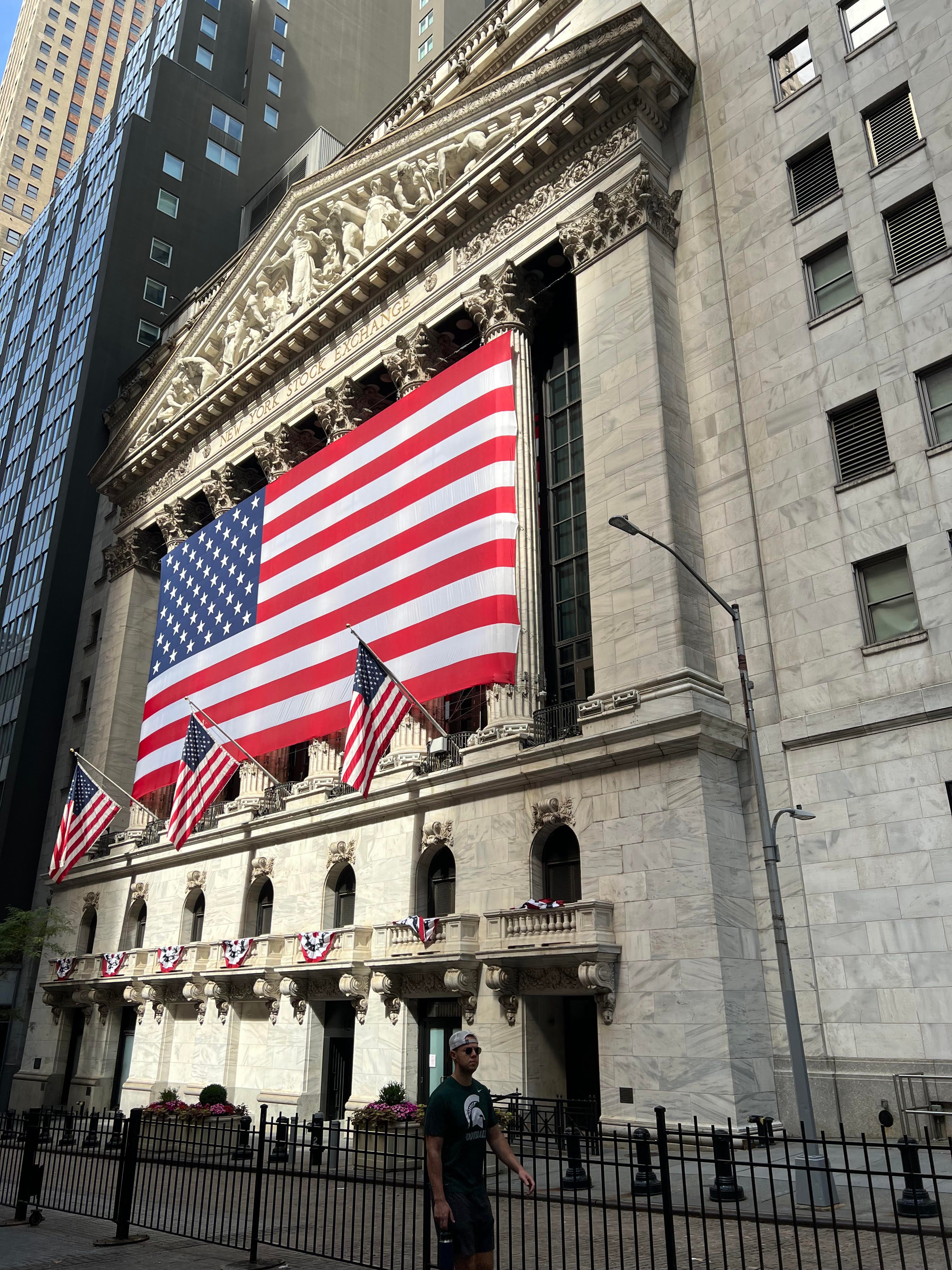
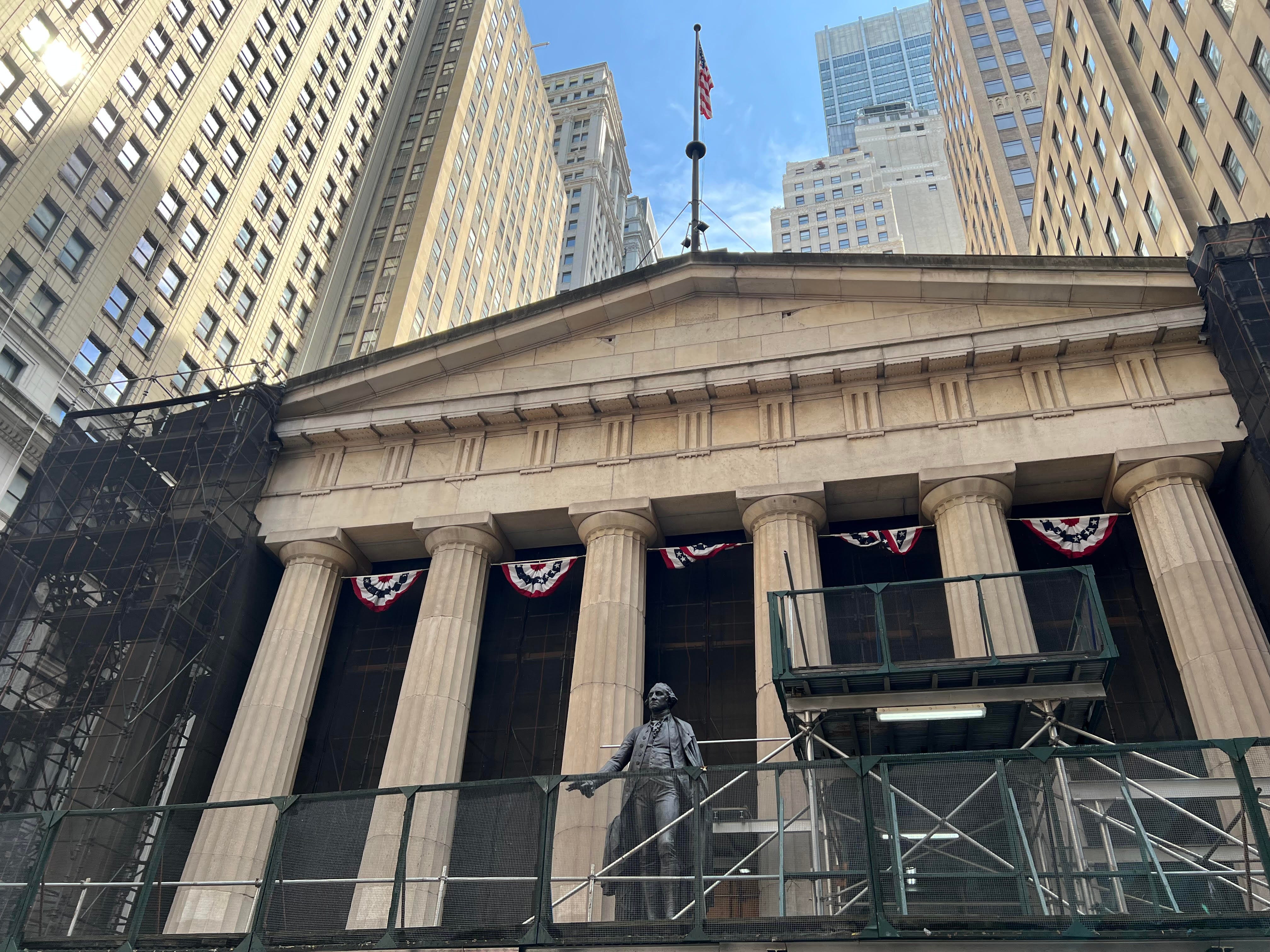
What did you do during the Semiquincentennial, daddy? Over here, we paid our respects to Hamilton, Gallatin, American commerce, billowy tall sails, badass flyovers, crazy proximity to East River fireworks, and of course, non-king George:
* Kmele? He spent the Fourth like he spent all week: On CNN. Busty Wimsatt, per usual, has the receipts:
* On Thursday, I published a historically topical piece over at Reason titled, “Americans Will Never Shut Up or Do As We’re Told.” The opening conveys the greatest anecdote I’ve learned during the past two years of Revolution-maxxing:
In 1757, a full generation before the American Revolution, British soldiers in Albany, New York—the main military staging area for the French and Indian War—demanded that the local sheriff open up his jail to detain a town farmer accused of harassing nearby troops.
The sheriff, a physically unimpressive shoemaker in his early 30s named Abraham Yates, refused on the grounds that they had no legal writ. Yates complained about the marauding ways of the occupying forces to John Campbell, Fourth Earl of Loudoun, who had recently been installed as England’s commander in chief for all of North America. After Lord Loudoun imperiously retorted that there was a war on, Yates filed a complaint against the commander to New York’s lieutenant governor, James De Lancey. That’s when things got spicy.
As recounted by the historian Russell Shorto in New York Archives magazine: “Loudoun approached Yates on the street and the two had a public confrontation. Loudoun said he had seen the letter Yates sent to the lieutenant governor and that it was filled with lies. Yates replied that every sentence could be proved. Loudoun had previously used the local jail for military purposes; he now warned Yates against discharging a military prisoner he had confined there. ‘Sir,’ Yates replied, ‘I have already discharged him.’ ‘By whose order?’ Loudoun demanded to know. ‘By the King’s writ,’ Yates responded. Loudoun then ordered the sheriff to stay daily within his sight—’and if you do not do I shall send for you with a file of muskets, with their bayonets fixed.’ The Albanians who were witness to the exchange must have thought that would be the end of it. Instead, the not terribly threatening-looking sheriff replied, ‘My Lord, I have no time to wait upon you. I have other business to attend.’ Loudoun, barely containing his fury, vowed that for Yates’s insolence he would turn his house into a hospital for wounded soldiers and the local church into an artillery storehouse. ‘I don’t know what you will do, My Lord,’ Yates replied coolly, ‘but I know you have no right to do it.’”
* Reminder, also from Thursday, that you can watch/listen to the whole run of The Revolutionaries in one shareable place!
* Virginia Postrel, a Fifth Column guest from so long ago that the headline was “Brexit, Benghazi, the BET Awards,” had a terrific piece this week over at Liberty Fund on America’s revolutionary reconsideration/harnessing of that contentious human trait of ambition. Here’s a longish excerpt:
An Anglican homily—dating to 1571 but still in print as late as the nineteenth century—defined ambition as “the unlawful and restless desire in men to be of higher state than God hath given or appointed unto them.” Ambition was a grievous offense, springing from “Luciferian pride and presumption.” Virtuous Christians knew their place. The leaders of the rebel colonies were, in this view, treasonous sinners.
The drafters of the Declaration of Independence understood the stigma. They changed its first sentence to make it less provocatively ambitious, historian William Casey King argues in Ambition, A History: From Vice to Virtue. Thomas Jefferson’s original draft read, “When in the course of human events it becomes necessary for a people to advance from that subordination in which they have hitherto remained….” That formulation skittered dangerously close to articulating a desire to be higher than God ordained. Avoiding the reference to hierarchy, the phrase was softened to “for one people to dissolve the political bands which have connected them with another….” (Emphasis added.) The new formulation subtly suggested that the two parties were previously equal partners rather than conceding—and hence challenging—the mother country’s superior status.
It was, of course, the next sentence of the Declaration that became the fundamental tenet of the American creed: “We hold these truths to be self-evident, that all men are created equal, that they are endowed by their Creator with certain unalienable Rights, that among these are Life, Liberty and the pursuit of Happiness.” This was a statement of liberal political philosophy, embedded in intellectual history. But the principles of the Declaration quickly became something more: a cultural force shaping the lives and expectations of ordinary Americans who would never read John Locke or encounter the concept of eudaemonia.
That culture had political ramifications. In northern states, successful campaigns for the abolition of slavery arose after independence, affirming the public doctrine of liberty. Responding to demands for equality, states throughout the union extended suffrage to almost all white men and, in some places, to free blacks as well. By the early nineteenth century, a higher percentage of Americans enjoyed the right to vote than in any other time or place to that date. Among the enfranchised were servants, apprentices, and sons still under their father’s roofs. […]
Even as it embraced ambition, America’s emerging culture rejected the inferiority of “private occupations and pursuits.” Although universally admired, George Washington was not the quintessential new American. The dignified, self-fashioned gentleman of fine manners and landed estate, who married up and channeled his ambition into an army career—that most traditional and hierarchical of outlets—was an icon, not a role model. In his Farewell Address, Washington referred five times to ambition, always as a danger to the union.
The exemplary American was instead Benjamin Franklin, the runaway apprentice, newspaperman, entrepreneur, inventor, scientist, postmaster, and founder of a local fire department, library, hospital, and university. Franklin represented what could happen in [Adam] Smith’s ideal of a society “where every man was perfectly free both to chuse what occupation he thought proper, and to change it as often as he thought proper.” Genius would reveal itself. Nor were such polymathic talents the only ones valued in the new republic. Allowing countless individuals the freedom to piddle for little prizes—using their knowledge, creativity, and energy to address discrete problems and local concerns—built the nation.
* Cleansing Bicentennial psychedelia break, care of La Postrel’s successor:
* Speaking of Nick, wanna see what The Reason Roundtable looks like when taped in The Fifth Column studio? Here ya go:
* Chat of the Week comes from Dacia:
I stood in the middle of the street with my dog and sang the Star-Spangled Banner and America the Beautiful by myself with fireworks going off all around me. No one heard me, but I felt pretty damn patriotic. Been waiting for 250 since I was a kid, and all the fireworks and pomp gives me hope that this nation, despite all the infighting and muckery, is an amazing place and I am lucky to be here right now, experiencing all of it. Happy 250, everyone.
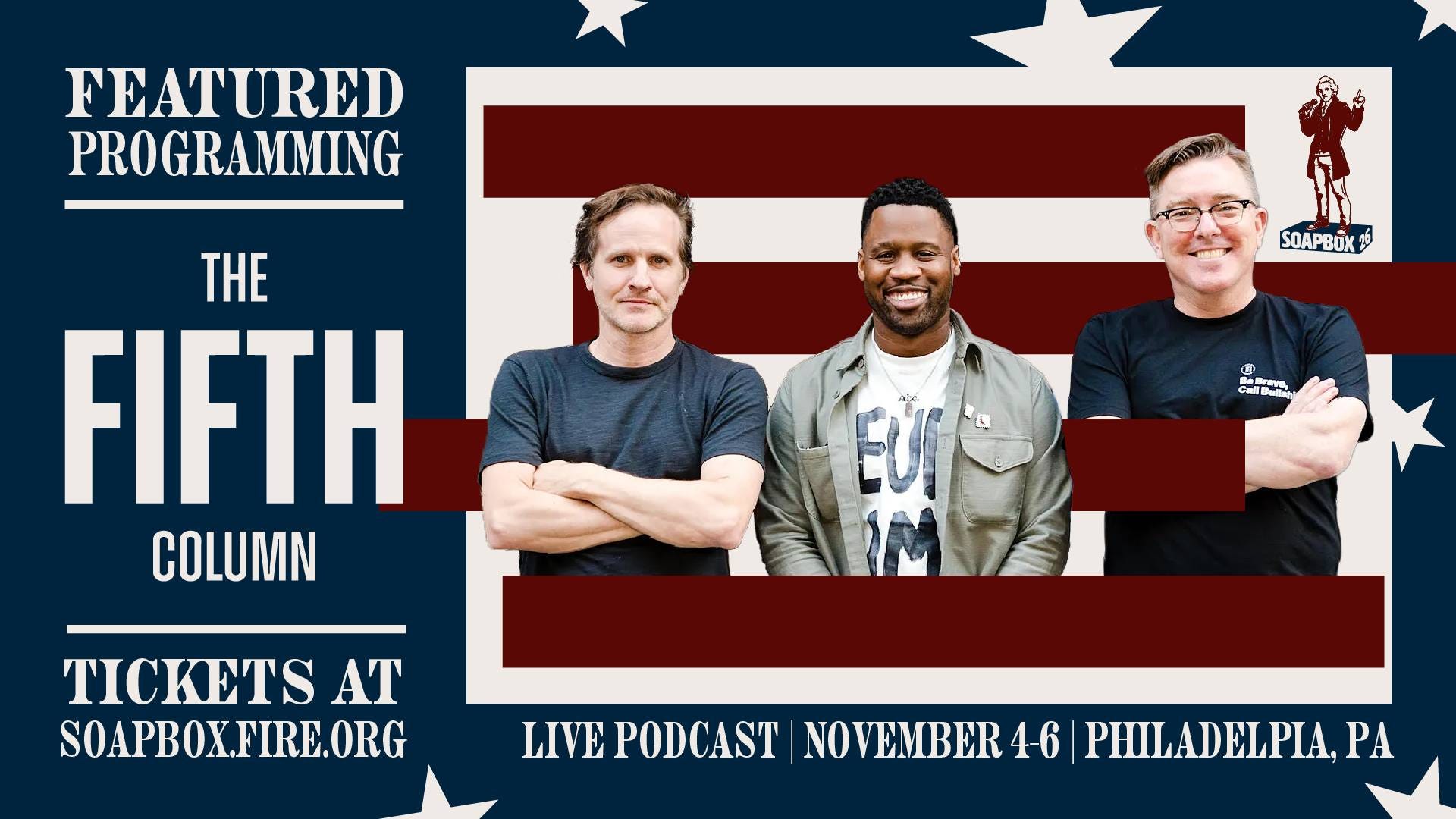
* Events! July 14 is an Epstein Files debate at the SoHo Forum in NYC between Michael Tracey (veteran of episode #105) and Marcella Szablewicz on the resolution: “The Jeffrey Epstein scandal has become a case of moral panic.” And Nov. 4-6 we will be podcasting from the Foundation for Individual Rights and Expression’s Soapbox 26 conference in Philadelphia, along with fellow speakers Sarah Isgur (Members Only #314), Noam Dworman (#549), David French (#191, #325, #365, #555) Nick Gillespie (S.D. #72, #379, M.O. #251, #551), Greg Lukianoff (#216, M.O. #183, #427, M.O. #276), Jacob Mchangama (#102 & #344), John McWhorter (#84, #121, #188 & #366), Matt Taibbi (#226, #348), and Ilya Shapiro (#361), for starters. Make sure to use the discount code FIFTH to save $50 on tickets.
* Time for Producer Jason’s Video Vault!
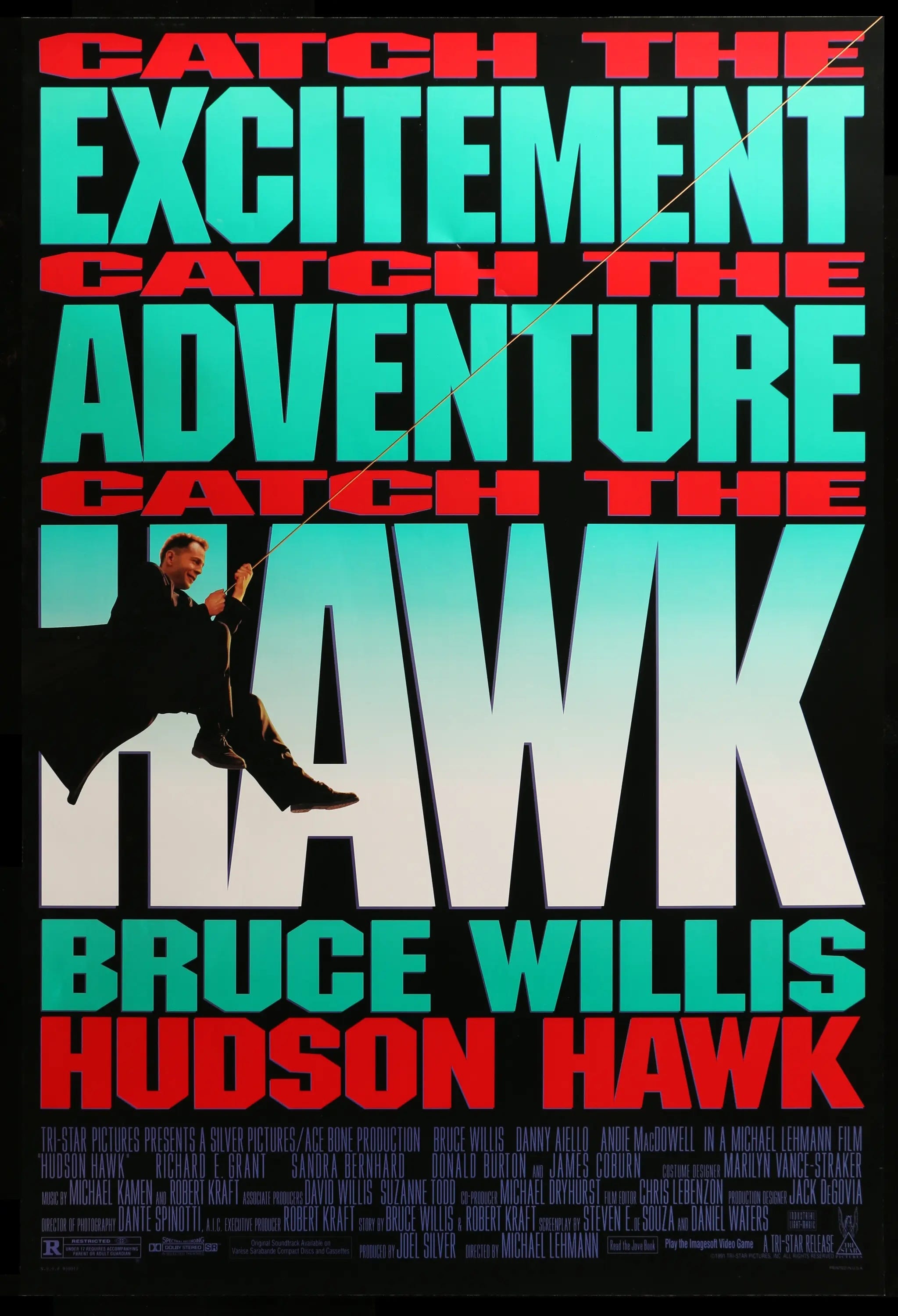
2026 is riddled with anniversaries: the 250th anniversary of the U.S.A., the 10th anniversary of The Fifth Column, and the 35th anniversary of The Replacements’ last show. One milestone that I celebrated a bit more quietly was the 35th anniversary of Hudson Hawk. I say quietly only because there are so few people willing to celebrate a film that was despised by audiences and reviled by critics, after having been conceived by Planet Hollywood co-founder Bruce Willis. But back in 1991 when I headed to the theater on opening weekend, I was blissfully unaware of the reviews and far removed from any concern over the film’s financials, so what I saw up on that screen was one of the ballsiest movies ever made. From the casting (Richard E. Grant, Sandra Bernhard, James Coburn), to the conceit (cat burglars who time their robberies by singing old standards), to the cartoon physics (you’ll see), it’s the kind of movie that could only be born of ego and hubris. As Grant wrote of the experience, “Standing about in ‘Vargas-girl’ high heels, crotchless leather panties, brassiere, stockings, and lipstick, like a lost member of some touring Rocky Horror Show is the exact moment that I know–beyond all reasonable doubt–THAT THIS MOVIE IS A ONE-WAY TICKET OUT OF MY MIND.” Watch free on (with ads) on YouTube; buy the BluRay; here’s the trailer:
* Comment of the Week comes from Randolph Carter:
Yikes, it’s like when Chris Stirewalt subs for Jonah Goldberg, I thought Matt Welch was on this episode, he and The Honorable Member sound almost exactly alike!
Sendoff: Aww crap, with all the patriotic foofaraw I didn’t notice that the cop from The Village People died. Victor Willis was more than that, of course, but also excatly that. Meaning, 99.9 percent of the value of Willis’s musical career was contained within the meteoric rise and fall of the People from 1977 to 1979, but the officer was more than just a charismatic lead singer: He was the whole damn band when it started, a voice and burgeoning songwriter and stage talent (having starred in the Broadway version of The Wiz), attached at the hip to French disco producer Jacques Morali. The music came first, the costumed macho men later. Willis co-wrote all the biggies: “Macho Man” (#25), “In the Navy” (#3), and “Y.M.C.A.” (#2), the latter of which Willis rather improbably insisted in 2024 was not about gay stuff. Willis himself was not just hetero, he was married to damn Phylicia Rashad back when she was Phylicia Allen, and in fact co-wrote a concept disco album for her called Josephine Superstar. The disco backlash, as I wrote in Firehose #198, was a massive and sudden thing, wiping out careers overnight, and though the causality has almost certainly been exaggerated, anti-gay animus was part of it, and The Village People were the most notorious avatars. In the event, Willis quit the band right before their Can’t Stop the Music movie flopped, then after 1983 basically vanished for a quarter-century in a haze of drugs and obscurity. He did get a third act of reunion tours and political do/don’t-use-my-song micro-versies, and good on him for it. The macho man gave millions of us some infectiously upbeat ear-wormed joy. And I swear to God, the Navy came this close to using this as a recruiting song:
Apparently Richard E. Grant and Sandra Bernhard are friends to this day after bonding over the fact that they knew Hudson Hawk was awful but were stuck shooting it.
Hudson Hawk is GREAT! It has a 23% Tomatometer though.
Fun-fact: Tommy five-tone originally died in the car at the end, but the testing showed that people hated that so they reshot it to the theatrical release where he just movie-magicked back to life.